Emergency Roofing in Marblehead, MA
Emergency roofing Marblehead homeowners and businesses can reach day or night is available from Marblehead Roofing at (339) 229-8855. If water is coming through your ceiling, a storm has torn off shingles, or a tree limb has punctured your roof, call us. We can stop the water with an emergency roof tarp or a temporary patch, document the damage, and plan the permanent repair.
24/7 emergency service. Call now: (339) 229-8855. We serve residential and commercial properties, we are insured, and a free inspection and written estimate for the permanent repair follow the emergency work.
What counts as a roofing emergency?
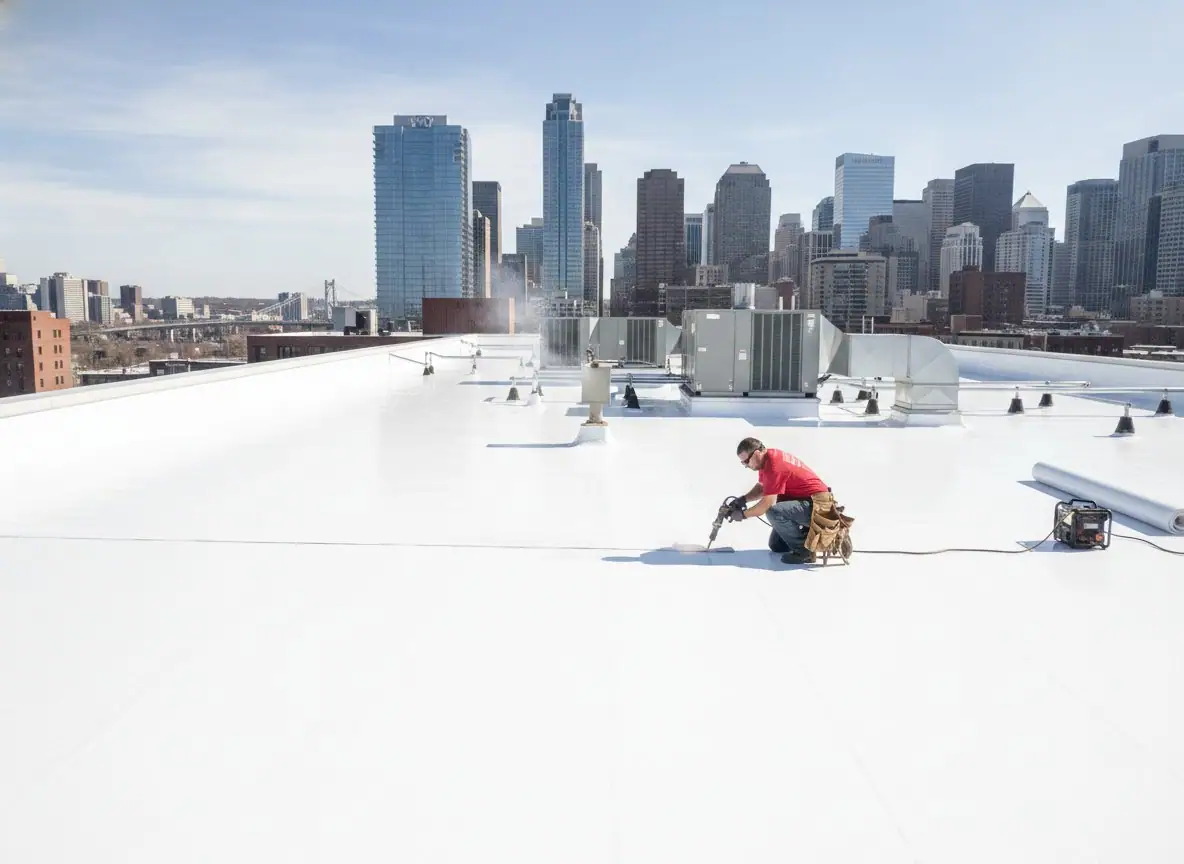
A roofing emergency is any roof failure that is letting water, wind, or debris into the building right now, or that could injure someone or cause structural damage if it waits until regular business hours. Not every roof problem is an emergency. These are the situations that are:
- Active leaks: water dripping through ceilings, running down walls, or pooling around light fixtures.
- Missing roofing: wind has stripped shingles, ridge caps, or sections of membrane and left the deck exposed.
- Impact damage: a fallen tree or limb has punctured the roof or cracked rafters.
- Sagging or deflection: part of the roof is dipping, often from water-soaked decking or heavy snow and ice.
- Flat roof failures: a split seam or blown-off membrane on a commercial or residential low-slope roof.
- Flashing failures: chimney, skylight, or wall flashing torn loose during a storm, with water getting behind it.
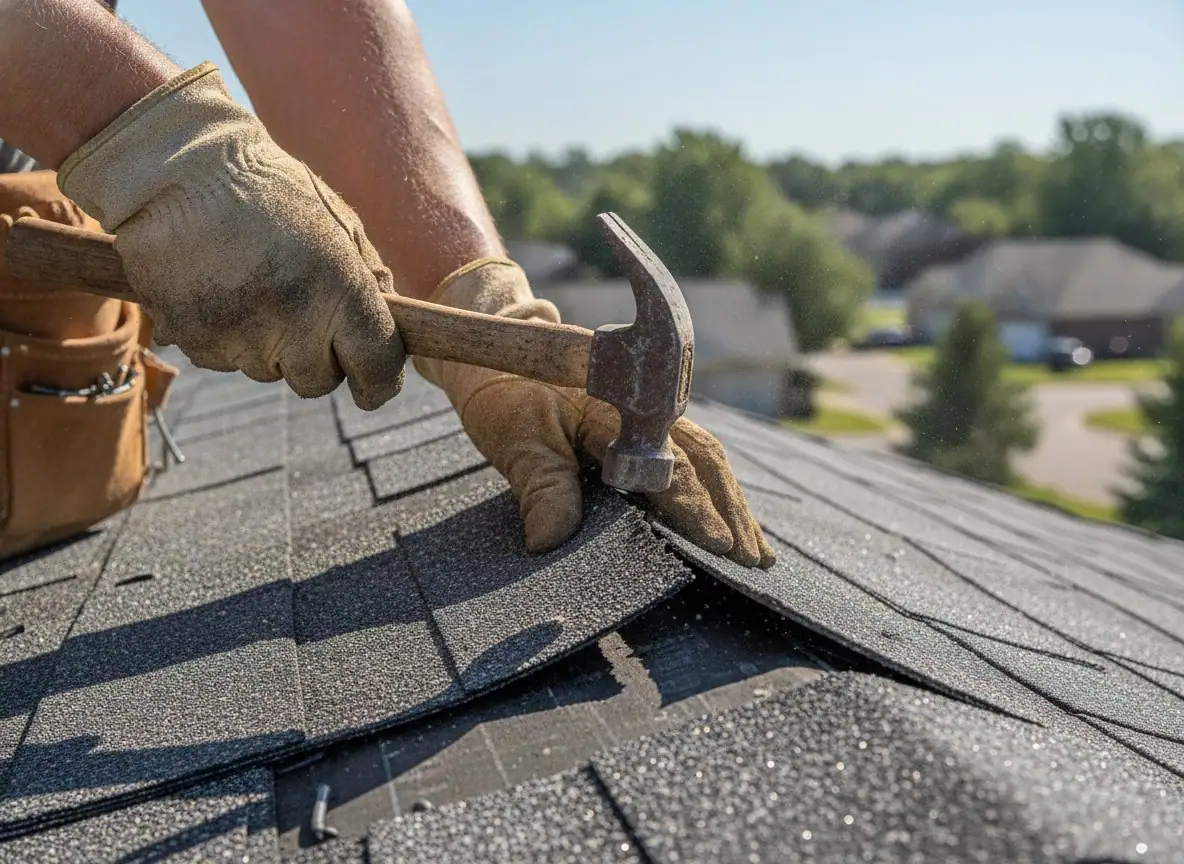
A few curled shingles or a stain that appeared months ago can usually wait for a scheduled roof repair visit. Sometimes the line is not obvious, so it helps to know the warning signs.
What are the signs you need urgent roof repairs?
You need urgent roof repairs when you see water entering the building, structural changes in the roof, or storm damage that leaves the deck exposed. Check inside and out:
Inside the building
- Dripping water, wet insulation, or a ceiling that is bulging or discolored and spreading
- Damp attic sheathing, or daylight showing through roof boards
- Water near electrical fixtures, outlets, or the service panel
- A musty smell after rain, which points to a hidden leak that is getting worse
Outside the building
- Shingles, tiles, or membrane pieces in the yard or gutters after a storm
- Bare decking, torn underlayment, or lifted metal panels
- Loose or bent flashing at chimneys, vents, and walls
- Ice dams with water backing up under the shingles at the eaves
- A visible dip or wave in the roofline
If you see any of these and rain or snow is in the forecast, treat it as urgent. On the North Shore, the weather usually causes these problems, so it helps to know what to watch for.
Free, no-obligation estimates
Talk to Marblehead Roofing
Tell us what you need and we’ll take it from there.
What causes emergency roof damage in Marblehead?
Most emergency roof damage in Marblehead comes from coastal storms, wind, ice, and falling trees. Older roofs and aging flashing make each of these more likely. Conditions on the harbor and the Neck are hard on roofs:
- Nor'easters and coastal storms: sustained onshore wind lifts shingle edges and pushes rain sideways under flashing. See our storm roof damage repair page for more.
- Wind uplift: exposed homes near the water take gusts that can peel shingles, ridge caps, and flat roof membranes.
- Ice dams: snow melts over a warm attic, refreezes at the eaves, and forces meltwater under the roofing.
- Heavy snow loads: wet snow can overload older framing or flat roofs with poor drainage.
- Falling trees and limbs: mature trees in older neighborhoods can puncture decking during high winds.
- Salt air and age: salt spray speeds up wear on fasteners, flashing, and metal components, so an older roof can fail suddenly in a storm.
Whatever the cause, what you do in the first hour matters. Here is how to protect people and property while help is on the way.
What should I do before the roofer arrives?
Before the roofer arrives, make sure everyone is safe, limit water damage inside, and take photos. Do not climb onto the roof. Use this checklist:
Safety checklist
- Stay off the roof. Wet, icy, or storm-damaged roofs are dangerous, especially at night or in wind.
- Keep water away from electricity. If water is near outlets, fixtures, or the panel, turn off power to that area at the breaker if you can do so safely. Otherwise, call your utility.
- Stay out of rooms with sagging ceilings. A water-filled ceiling can collapse. If it is safe, poke a small hole at the lowest point of the bulge and set a bucket under it to drain the water in a controlled way.
- Catch and contain water. Use buckets, towels, and plastic sheeting. Move furniture, electronics, and documents out of the way.
- Check the attic from the access hatch only, and set containers under drips if you can reach them safely.
- Keep people and pets away from fallen limbs, downed wires, and debris around the house.
Read moreShow less
Insurance documentation tips
- Photograph and video the damage inside and out from the ground before any cleanup, including wide shots and close-ups.
- Write down the date, time, and weather conditions when the damage happened or when you found it.
- Keep notes of every call, including names and claim numbers.
- Save receipts for buckets, tarps, fans, hotel stays, or anything else you spend to prevent further damage.
- Keep damaged materials, such as shingles from the yard, until your adjuster has seen them or says otherwise.
Once you have done what you safely can, the next step is stopping the water at the roof itself. Usually that means a tarp.
How does an emergency roof tarp work?
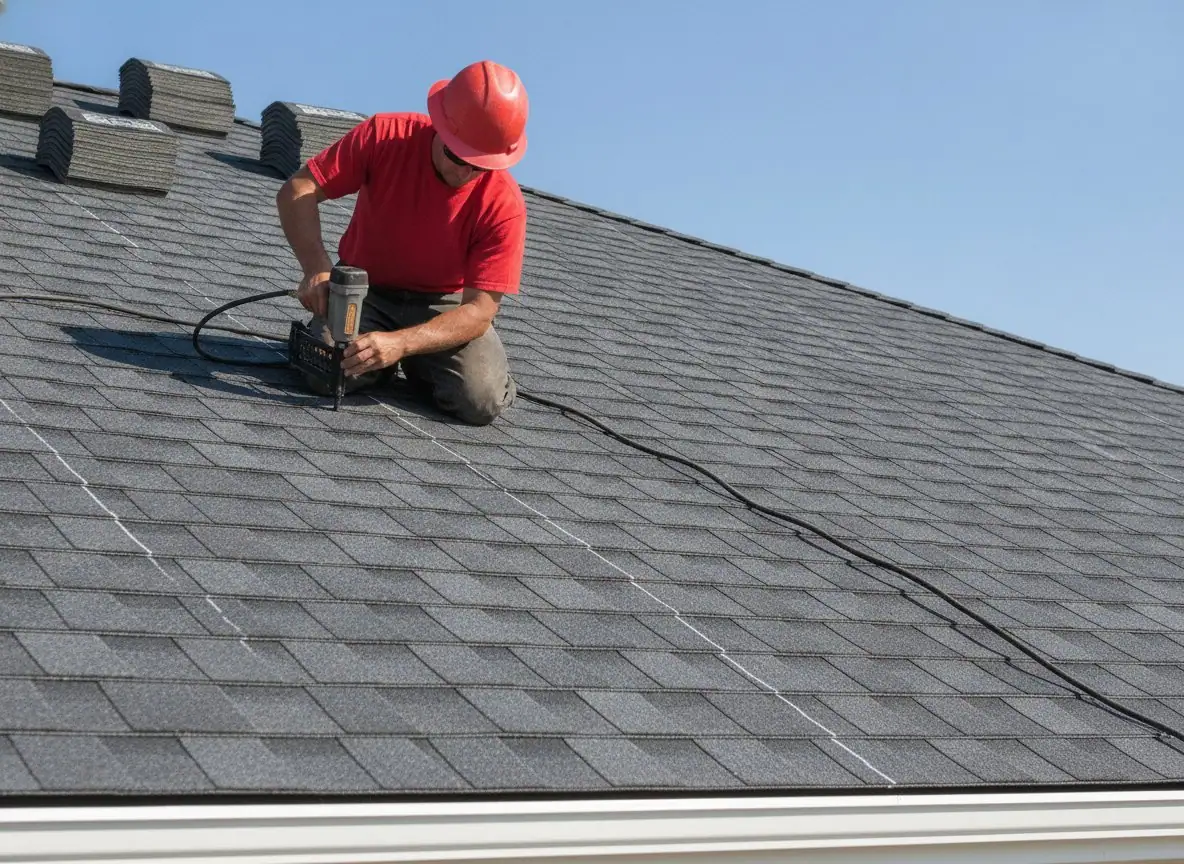
An emergency roof tarp is a heavy-duty waterproof sheet stretched over the damaged area and secured so that rain runs over it and off the roof, not into the building. Done correctly, it buys time until a permanent repair can be made. A proper installation works like this:
- Size the coverage. The tarp should extend well past the damage on every side and, where possible, over the ridge, so water cannot run underneath from above.
- Clear the area. Loose shingles, branches, and sharp debris are removed so they do not tear the tarp.
- Anchor with boards. The edges are wrapped around lumber strips that are fastened to the roof. This spreads the holding force and keeps wind from tearing the tarp at the fastener holes.
- Shingle the water path. The upper edge is tucked or lapped so runoff flows over the tarp, never under it.
- Check for gaps. Corners and edges are secured against wind lift, and drainage paths are kept clear.
Tarps work best for large areas, missing sections, and punctures. For smaller, well-defined failures, a temporary patch is often the better choice, and knowing the difference helps you plan.
At a glance
Emergency roof patch vs. permanent repair
An emergency roof patch seals a small, specific failure for a short time, and a permanent repair restores the roof system to full condition. A tarp sits between the two for larger damage. Here is how they compare:
| Option | Best for | How it works | How long it lasts | What comes next |
|---|---|---|---|---|
| Emergency roof tarp | Large exposed areas, missing sections, tree punctures | Waterproof sheet anchored with boards over the damage | Short term, weeks rather than seasons; sun and wind wear it down | Inspection and permanent repair or replacement |
| Emergency roof patch | Small leaks, lifted flashing, a few missing shingles, a split flat roof seam | Sealant, membrane patch, or replacement shingles applied to the failure point | Short term, until conditions allow a full repair | Permanent repair of the surrounding area |
| Permanent repair | Damage confined to part of an otherwise sound roof | Damaged decking, underlayment, flashing, and roofing are replaced to match the system | Long term, as part of the existing roof | Routine roof maintenance |
| Replacement | Widespread damage or an aging roof near the end of its life | Tear-off and new roof system | Full service life of the new roof | Regular inspections |
Simple rule: if the opening is bigger than a few shingles or the decking is exposed, tarp it. If the failure is small and clearly located, patch it. In both cases, schedule a permanent fix. For ongoing leaks without storm damage, see our roof leak repair service. Here is how we handle the call from start to finish.
How does our 24/7 emergency roofing process work?
Our 24/7 emergency roofing process follows five steps: you call, we assess, we tarp or patch, we document, and we build a permanent repair plan.
- Call. Phone (339) 229-8855 at any hour. Tell us your address, what you are seeing, where the water is coming in, and whether anyone is at risk.
- Assess. Our crew inspects the roof and interior once it is safe to do so. We find the source of the water and decide whether a tarp or a patch is the right short-term fix.
- Tarp or patch. We secure the damaged area to stop more water from getting in and to protect the structure until the permanent work.
- Document. We photograph the damage and the temporary work so you have a record for your insurance claim.
- Permanent repair plan. After the emergency work, we complete a free inspection and give you a written estimate for repair or, if the damage is extensive, roof replacement.
A common next question is how long all of this takes.
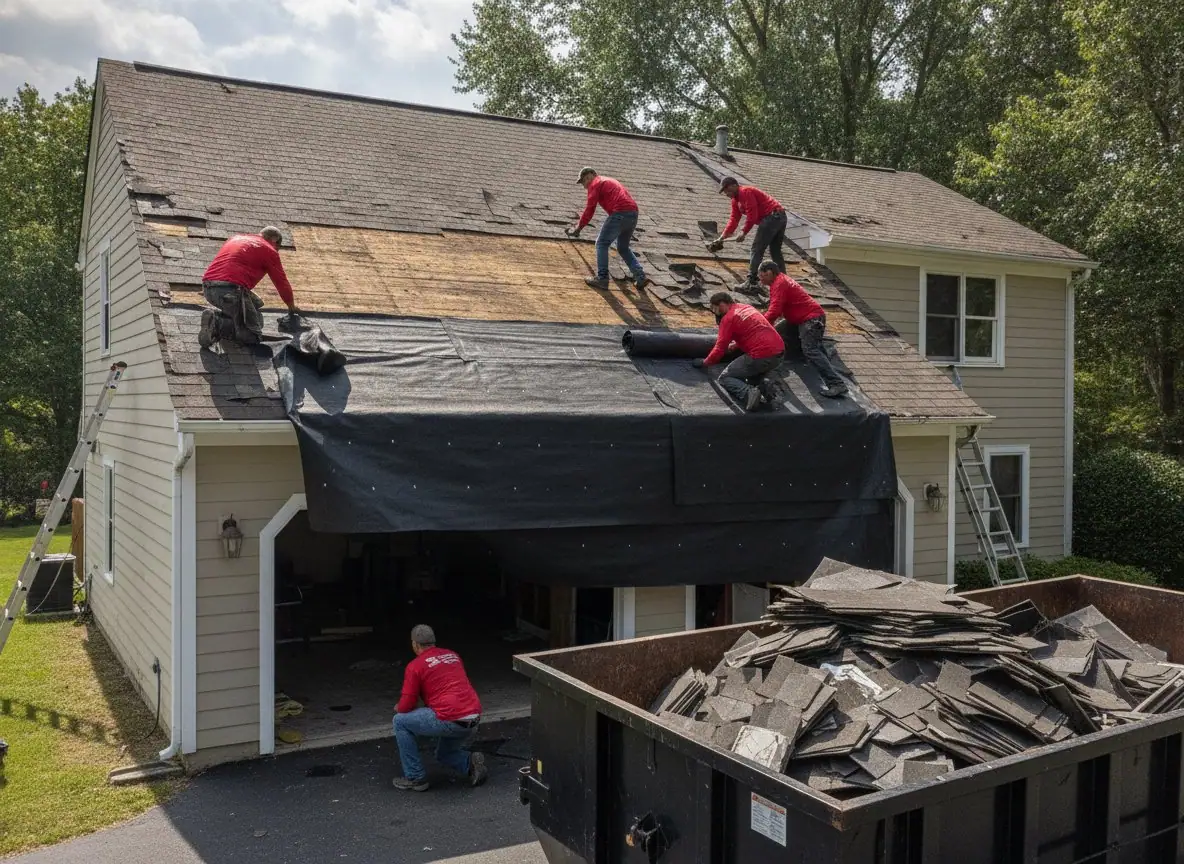
How long does emergency roof repair take?
Most emergency tarping or patching takes a few hours on site, while the permanent repair is scheduled separately and depends on damage, materials, weather, and insurance approval. Typical factors include:
- Temporary work: a straightforward tarp or patch on an accessible roof is usually finished in one visit. Steep pitches, multiple damaged areas, or debris removal add time.
- Safety conditions: during active lightning or extreme wind, the crew may stabilize what they safely can and return to finish once conditions improve.
- Permanent repair: a localized shingle or flashing repair may take a day. Decking replacement, flat roof sections, or a full replacement take longer.
- Materials and approvals: matching existing materials, permits, and adjuster visits can affect when permanent work starts.
The same factors that drive timing also drive what the work costs.
At a glance
How much does emergency roof repair cost in Marblehead?
The cost of emergency roof repair in Marblehead depends on the size and type of damage, the roof's pitch and access, the materials involved, and the time of the call. We give you a written quote after a free inspection, not a guess over the phone. These are the main cost factors:
| Cost factor | Why it matters |
|---|---|
| Size of damaged area | Larger openings need more tarp, lumber, labor, and later more replacement material. |
| Roofing material | Asphalt, architectural shingles, metal, slate, and flat roof membranes each take different repair methods and materials. |
| Pitch and access | Steep roofs, multi-story homes, and tight lots need more safety equipment and time. |
| Extent of hidden damage | Wet decking, rotted framing, or saturated insulation adds work beyond the surface. |
| Tear-off needs | Removing damaged layers before repair or replacement adds labor and disposal. |
| Permits | Larger permanent repairs and replacements may require local permits. |
| Debris and tree removal | Limbs on the roof have to be cleared before the roof can be secured. |
For more detail, see our roof repair cost guide. Financing is available for permanent work. For many storm-related losses, the bigger question is whether insurance will pay.
Will insurance cover emergency roof repair?
Homeowners and commercial property insurance often covers sudden damage such as wind, hail, falling trees, and ice, along with reasonable steps to prevent further damage. Coverage depends on your policy, and wear-and-tear or long-term neglect is usually excluded. What helps a claim:
- Report the loss promptly and follow your insurer's instructions.
- Show that you took reasonable steps to prevent further damage, such as an emergency tarp.
- Provide photos, dated notes, and receipts, as described in the checklist above.
- Keep the contractor's documentation of the damage and temporary repair.
We help homeowners with insurance claims, including documentation and walking through the damage with you. Learn more on our roof insurance claims help page.
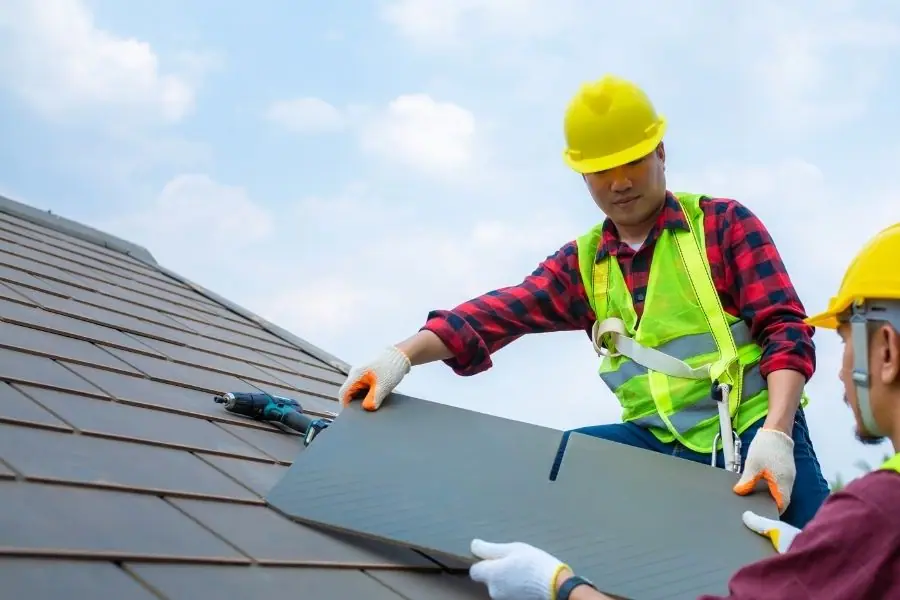
Emergency roofing Marblehead service area
We take emergency calls in Marblehead and nearby communities, including:
- Marblehead
- Swampscott
- Salem
- Lynn
- Nahant
- Beverly
- Peabody
- Danvers
- Gloucester
- Boston
- Cambridge
- Quincy
- Newton
- Lowell
- Lawrence
- Worcester
Not sure if you are covered? Call (339) 229-8855 and ask. You can also browse all roofing services in Marblehead.
FAQ
Frequently asked questions
Can you tarp a roof in the middle of the night?
Yes. We provide 24/7 emergency service, so you can call at any hour. At night or during severe weather, the crew decides what can be done safely. If conditions are too dangerous for full tarping, we stabilize what we can and finish as soon as it is safe.
How long can an emergency roof tarp stay on?
A tarp is a short-term measure, generally meant for weeks rather than months. Sun, wind, and freeze-thaw cycles break it down, and water can eventually get past it. Schedule the permanent repair as soon as you can.
Do you serve Lynn, Salem, Swampscott and Nahant for emergencies?
Yes. Lynn, Salem, Swampscott, and Nahant are all in our service area for emergency roofing, along with Marblehead and the other communities listed above.
Do you offer emergency roofing for commercial buildings?
Yes. We serve both residential and commercial properties, including emergency response for flat and low-slope roofs. See our commercial roofing page for more.
Should I call my insurance company or a roofer first?
If water is actively coming in, call a roofer first to stop the damage, then notify your insurer promptly. Most policies expect you to take reasonable steps to prevent further loss. Take photos before the temporary work if it is safe, and keep all receipts.
Roof leaking or storm-damaged right now? Call Marblehead Roofing at (339) 229-8855, day or night. After the emergency work, we provide a free inspection and a written estimate for the permanent repair.
Why choose us
Why choose Marblehead Roofing?
Free estimates
Get a clear, no-obligation estimate before any work begins.
Licensed & insured
Your property and our crew are protected on every project.
Residential & commercial
One team for homes, multi-family and commercial properties.
Locally owned & operated
A local team serving your community and the surrounding area.
Get in touch
Find roofing help near you
Request a free estimate online or give us a call — our team will follow up quickly.
- Call us(339) 229-8855
- Visit40 Tioga Way, suite 251, Marblehead, MA 01945
- HoursMon-Sun: 7:00 am – 7:00 pm