Roof Repair in Marblehead, MA
Roof repair is the fastest way to stop a leak, secure storm damage and add years to a roof that is otherwise sound. Marblehead Roofing handles roof repair for homes and commercial buildings in Marblehead and nearby North Shore communities, from a single slipped shingle to wind-torn flashing after a nor'easter. We offer 24/7 emergency service when water is coming in, and free inspections when you need answers before deciding what to fix.
This page explains when a roof fix makes sense, what the warning signs are, how repairs are done, what affects the price, and how to choose a roof repair contractor you can trust.
Quick triage: Is water coming in right now, or did a storm just tear off shingles or flashing? Call (339) 229-8855 for emergency roofing at any hour. No active leak? Stains, missing granules, aging shingles or a roof you are unsure about should get a free roof inspection.
What is roof repair and when do you need it?
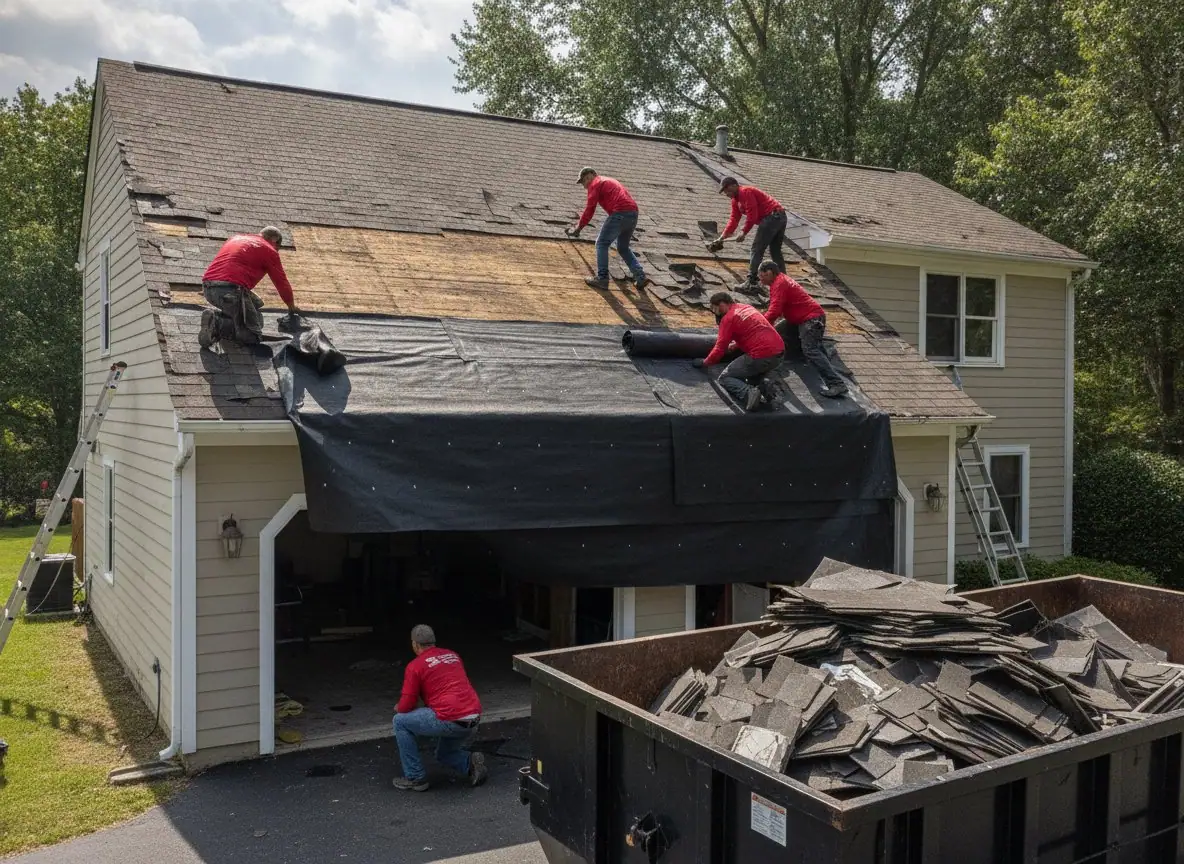
Roof repair fixes a specific failure, such as a leak, damaged shingles or loose flashing, without replacing the whole roof. It is the right choice when the damage is limited to one area and the rest of the roof still has useful life left. Common roof repair services include:
- Roof leak repair: tracing where water enters and sealing it at the source.
- Storm roof damage repair: replacing wind-lifted shingles, fixing impact damage from falling limbs and securing exposed decking.
- Flashing repair: resealing or replacing metal around chimneys, skylights, vents and wall joints, where most leaks start.
- Shingle repair: swapping cracked, curled or missing asphalt shingles and matching them to the existing roof.
- Flat roof repair: patching blisters, splits and open seams on flat and low-slope roofs.
- Slate repair: replacing broken or slipped slates on older Marblehead homes without disturbing the sound slate around them.
You can browse every roof repair option on our services page. Knowing when you need one starts with recognizing the warning signs.
What are the signs your roof needs repair?
The clearest signs are water stains inside, missing or damaged shingles, and loose or rusted flashing. Use this checklist after storms and at least once a year:
- Brown stains or bubbling paint on ceilings or upper walls
- Damp insulation, drips or daylight visible in the attic
- Missing, cracked, curled or cupped shingles
- Heavy granule buildup in gutters or at downspouts
- Lifted, rusted or separated flashing at chimneys, vents and skylights
- Cracked or slipped slates, often visible from the ground
- Sagging rooflines or soft spots in the decking
- Ice dams along the eaves in winter
- Ponding water, blisters or open seams on flat roofs
- Moss or algae, which holds moisture against roofing in our damp coastal air
If you see one of these, the next question is how quickly you need to act.
Free, no-obligation estimates
Talk to Marblehead Roofing
Tell us what you need and we’ll take it from there.
What happens if a roof leak is left untreated?
An untreated roof leak spreads from the roof into the structure, and a small repair becomes a large one. Water soaks the decking and causes rot, wets insulation so it stops working, stains and collapses drywall, and creates conditions for mold within days. Wet framing weakens over time, and water reaching light fixtures or wiring creates an electrical hazard. In Marblehead, freeze-thaw cycles make it worse: water that gets under shingles freezes, expands and pries them further apart. A leak also tends to look minor inside while doing more damage out of sight, so it is worth having a professional trace it early. How it is traced and fixed depends partly on what your roof is made of.
At a glance
What are the three main types of roofing?
The three main types of residential roofing are asphalt shingles, metal and slate or tile, with membrane systems used on flat and low-slope sections. Each fails in different ways, so repairs differ too.
| Roof type | Where you see it | Common repair needs |
|---|---|---|
| Asphalt shingles (3-tab and architectural) | Most homes in Marblehead and the North Shore | Wind-lifted or missing shingles, granule loss, flashing leaks |
| Metal, including standing seam | Homes, porches, additions and commercial buildings | Loose fasteners, worn sealant, seam or panel damage |
| Slate and tile | Historic and older homes, especially in Old Town | Cracked or slipped pieces, failed nails, worn flashing |
| Flat membranes (EPDM, TPO, modified bitumen) | Dormers, porches, additions and commercial roofs | Seam separation, punctures, ponding, blisters |
These are the materials most repairs involve, but homeowners often ask about newer options too.
What is the newest type of roofing?
The newest roofing types are solar shingles, synthetic slate and shake, and high-reflectivity "cool" roofing. Solar shingles integrate photovoltaic cells into the roof surface. Synthetic slate and shake are made from polymer or composite materials that imitate natural slate or cedar at lighter weight. Cool roofing uses reflective coatings or light-colored membranes to cut heat gain. Impact-rated architectural shingles with stronger sealant strips are also a recent improvement, which matters in coastal wind. Newer products rarely change how a repair is approached on an existing roof, but they are worth knowing about if repairs lead to a replacement conversation. Whatever the material, a good repair follows the same basic steps.
How is a roof repaired?
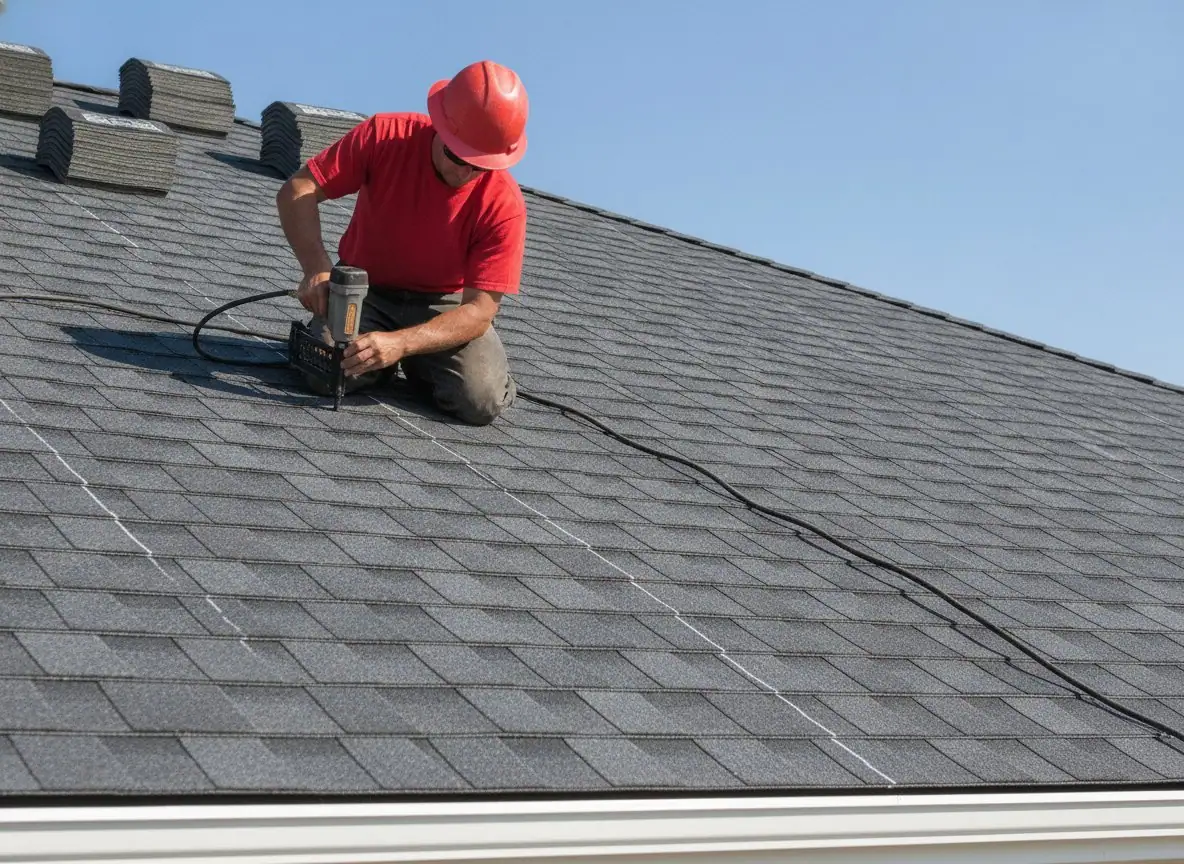
A roof is repaired by finding the true source of the damage, removing the failed materials, fixing what is underneath and sealing the area to match the surrounding roof. Our process:
- Inspect inside and out. We check the attic, ceilings and roof surface, because water often travels along rafters before it shows up as a stain.
- Trace the source. We examine flashing, vents, valleys, seams and fasteners near the problem area.
- Document and quote. You get a written explanation of what failed, what we recommend and a written quote, along with photos that also help with insurance claims.
- Protect the house. If rain is coming, the area is tarped or temporarily sealed first.
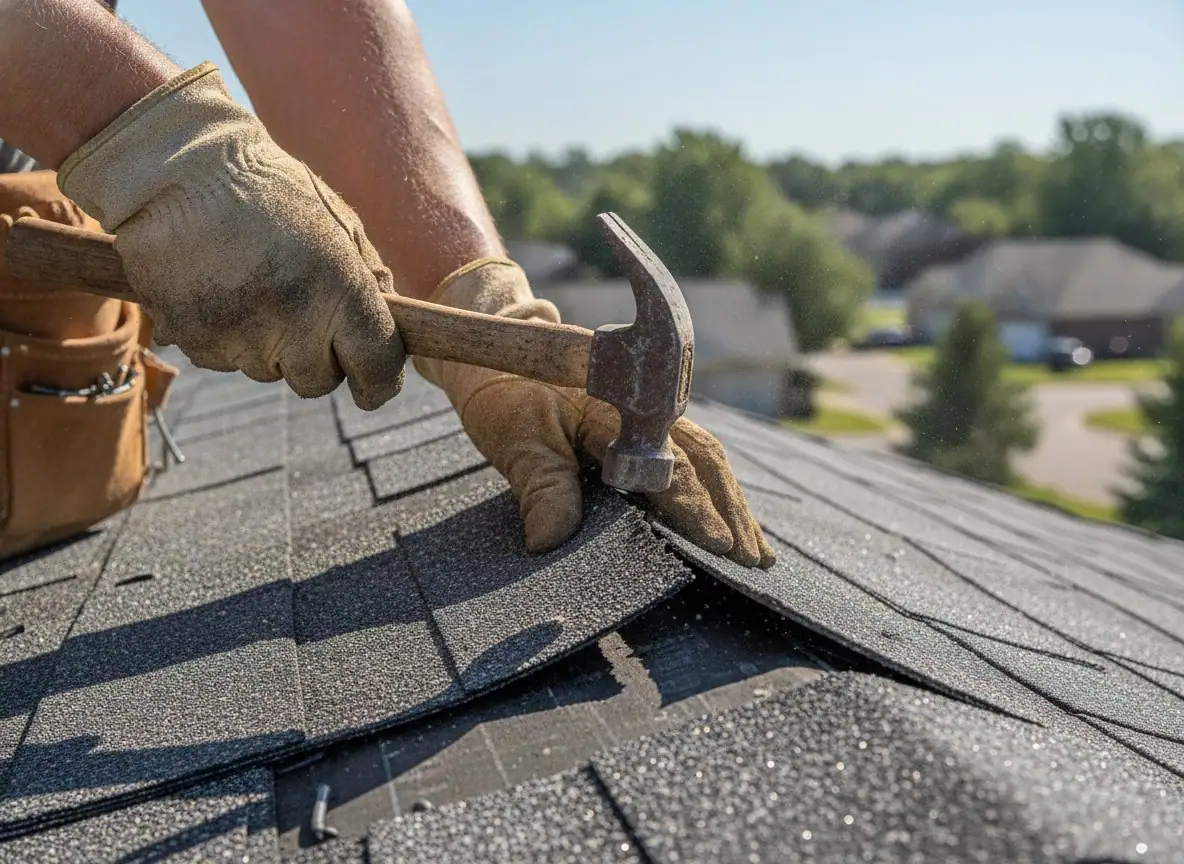
- Remove damaged material. Broken shingles, slates, flashing or membrane are taken off carefully to avoid disturbing sound material.
- Repair the substrate. Rotted decking is replaced and underlayment or ice and water barrier is restored.
- Install new materials. Shingles, slates, flashing or membrane are installed and matched as closely as possible to what is there.
- Seal, clean up and verify. We check the work, clear debris and walk you through what was done.
Whether a repair is worth doing depends heavily on how much life the roof has left.
At a glance
How long does a roof typically last?
Most asphalt shingle roofs last about 15 to 30 years, metal roofs 40 years or more, and slate can last a century or longer with proper care. Coastal exposure, ventilation, installation quality and maintenance all shift those numbers.
| Material | Typical lifespan |
|---|---|
| 3-tab asphalt shingles | 15–20 years |
| Architectural asphalt shingles | 25–30 years |
| Metal / standing seam | 40–70 years |
| Natural slate | 75–100+ years |
| Flat membranes (EPDM, TPO) | 20–30 years |
Repair or replace: a simple decision guide
- Repair when damage is limited to one area, the roof is well within its expected lifespan and the decking is solid.
- Repair slate when the slate itself is sound but individual pieces, nails or flashing have failed.
- Consider replacement when leaks keep appearing in different places, shingles are curling or bare across large areas, or the decking is soft in multiple spots.
- Consider replacement when the roof is near or past its typical lifespan and repair quotes are approaching a meaningful share of a new roof.
If replacement makes more sense, we will tell you and explain the options for full roof replacement. Either way, cost is usually the next question.
At a glance
How much does it cost to repair a roof in Marblehead, MA?
The cost of roof repair in Marblehead depends on the size of the damaged area, the roofing material, how hard the roof is to reach and what is found underneath. Because those factors vary so much, we give a written quote after a free inspection rather than a guess over the phone.
| Cost factor | How it affects the price |
|---|---|
| Size of the damaged area | A few shingles costs far less than a full slope or a long run of flashing. |
| Roofing material | Slate, standing seam and specialty materials take more skilled labor and costlier parts than asphalt. |
| Pitch and access | Steep roofs, three-story homes and tight lots need extra safety equipment and time. |
| Extent of hidden damage | Rotted decking, wet insulation or damaged framing adds materials and labor. |
| Tear-off needs | Removing multiple old layers to reach sound decking adds labor and disposal. |
| Flashing and penetrations | Chimneys, skylights and vents need careful flashing work. |
| Permits | Larger repairs may require a building permit from the town. |
| Emergency timing | After-hours tarping or storm response involves different scheduling than a planned repair. |
For more detail, see our guide to roof repair cost in Marblehead. To request a free inspection or online estimate for a residential or commercial roof, use the form on this page, visit our contact page or call (339) 229-8855, and tell us your address, roof type and what you are seeing. When storm damage is involved, insurance may cover part of the bill.
Does insurance cover roof repair?
Homeowners insurance usually covers roof repair when the damage is sudden and accidental, such as wind, hail, a fallen tree or ice, but not damage from age, wear or skipped maintenance. Policies differ on deductibles, wind or named-storm provisions and whether they pay full replacement value or depreciated value, so read yours closely.
Insurance claim help: Marblehead Roofing helps homeowners with insurance claims. We document damage with photos and written findings, explain what we found in terms your adjuster can use and can be present for the adjuster's visit. Report storm damage promptly, take your own photos, keep receipts for emergency tarping and avoid permanent repairs until the adjuster has seen the roof. Learn more on our insurance claims page.
Whether it is an insurance job or not, the contractor you choose determines how well the repair holds up.
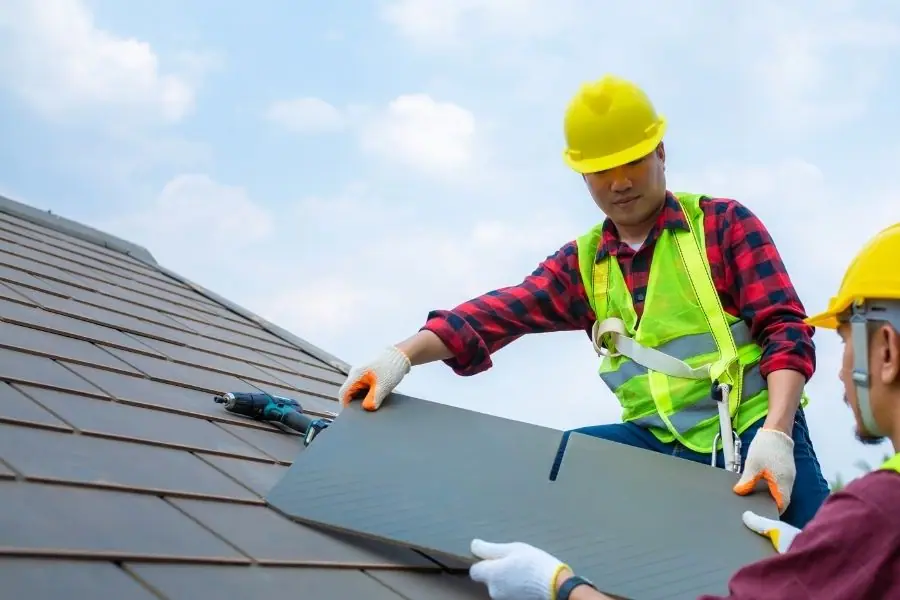
How do you choose a roof repair contractor in Marblehead?
Choose a roof repair contractor who is insured, inspects before quoting, explains the cause of the problem and puts the scope and price in writing. Questions worth asking any roofing repair contractor:
- Are you insured, and can you show proof?
- Will you inspect the attic as well as the roof surface?
- Can you show me photos of what failed?
- Do you work on my roof type, including slate or flat membranes?
- Is the quote written, with materials and scope listed?
- Do you offer emergency service if the leak returns during a storm?
- Will you help with an insurance claim if storm damage is involved?
Be cautious with door-to-door storm chasers who ask for large deposits or pressure you to sign immediately. Marblehead Roofing is insured, offers free inspections, 24/7 emergency service, insurance claim help and financing, and serves Marblehead, Swampscott, Salem, Lynn, Nahant, Beverly, Peabody, Danvers and other communities in our area. See all roofing services or read the answers to common questions below.
FAQ
Frequently asked questions
Can I repair a roof myself?
Small tasks like clearing gutters or spotting damage from the ground are reasonable for homeowners, but working on a roof is dangerous and most DIY fixes treat the symptom rather than the source. Flashing, slate and flat roof repairs especially need trained hands. A poor repair can also complicate an insurance claim, so a professional inspection is the safer first step.
Is it better to repair or replace an older roof?
Repair is better when the damage is isolated and the roof has useful life left. Replacement is usually better when leaks keep recurring, damage is widespread or the roof is at the end of its expected lifespan. Slate is an exception, since sound slate can often be repaired for decades. Our inspection will tell you which applies.
Do you offer temporary tarping for emergency leaks?
Yes. As part of our 24/7 emergency service, we can tarp or temporarily seal an active leak to protect your home until a permanent repair can be made. Call (339) 229-8855 at any hour.
Are there grants or financing options for roof work in Massachusetts?
Some Massachusetts towns and regional housing agencies run home repair or rehabilitation programs for income-eligible owners, so check with your town hall or local housing authority. Marblehead Roofing also offers financing; ask about it when we provide your quote.
How long does a typical roof repair take?
Most small repairs, such as replacing shingles or resealing flashing, are completed in a single visit. Larger repairs involving decking, multiple areas or slate can take longer, and weather affects scheduling. We give you a time estimate with your written quote.
If your roof is leaking, damaged or simply overdue for a check, call Marblehead Roofing at (339) 229-8855 to schedule a free inspection or get emergency help.
Why choose us
Why choose Marblehead Roofing?
Free estimates
Get a clear, no-obligation estimate before any work begins.
Licensed & insured
Your property and our crew are protected on every project.
Residential & commercial
One team for homes, multi-family and commercial properties.
Locally owned & operated
A local team serving your community and the surrounding area.
Get in touch
Find roofing help near you
Request a free estimate online or give us a call — our team will follow up quickly.
- Call us(339) 229-8855
- Visit40 Tioga Way, suite 251, Marblehead, MA 01945
- HoursMon-Sun: 7:00 am – 7:00 pm