Roof Replacement in Marblehead, MA
A roof replacement in Marblehead means removing your worn roof down to the deck and installing a new, code-compliant roofing system built for coastal wind, salt air, and New England winters. Marblehead Roofing handles complete roof replacement for homes and commercial buildings in Marblehead and nearby communities, and every project starts with a free inspection and a written estimate.
This guide covers what a reroof involves, when replacing makes more sense than repairing, how materials compare, how long the work takes, what drives the price, and how insurance and financing can help. If you already know you need a new roof, call (339) 229-8855 or request a free estimate.
What is a full roof replacement?
A full roof replacement removes every layer of old roofing, repairs the deck underneath, and installs a new roof system from the deck up. That is different from a repair, which fixes one area, and from an overlay, which puts new shingles over old ones.
A complete roof replacement typically includes:
- Tear-off of existing shingles, underlayment, and worn flashing
- Inspection and replacement of rotted or soft sheathing
- Ice and water shield at eaves, valleys, and penetrations
- Synthetic underlayment across the rest of the deck
- New drip edge, step flashing, chimney and wall flashing, and pipe boots
- Ventilation updates such as ridge vents and intake vents
- The new roofing material, ridge caps, and cleanup
Because a full reroof exposes the deck, it is the only way to find and correct hidden damage. Knowing what the job includes leads to the bigger question of when it is actually necessary.
At a glance
When do you need a roof replacement instead of a repair?
You need a roof replacement when damage is widespread, the roof is near the end of its service life, or repeated repairs are no longer stopping leaks. A localized problem on an otherwise sound roof is usually a job for roof repair.
| What you see | Repair is usually enough | Replacement is usually better |
|---|---|---|
| Missing shingles | A few after a storm | Many, across multiple slopes |
| Leaks | One leak at a vent or chimney | Several leaks or recurring leaks |
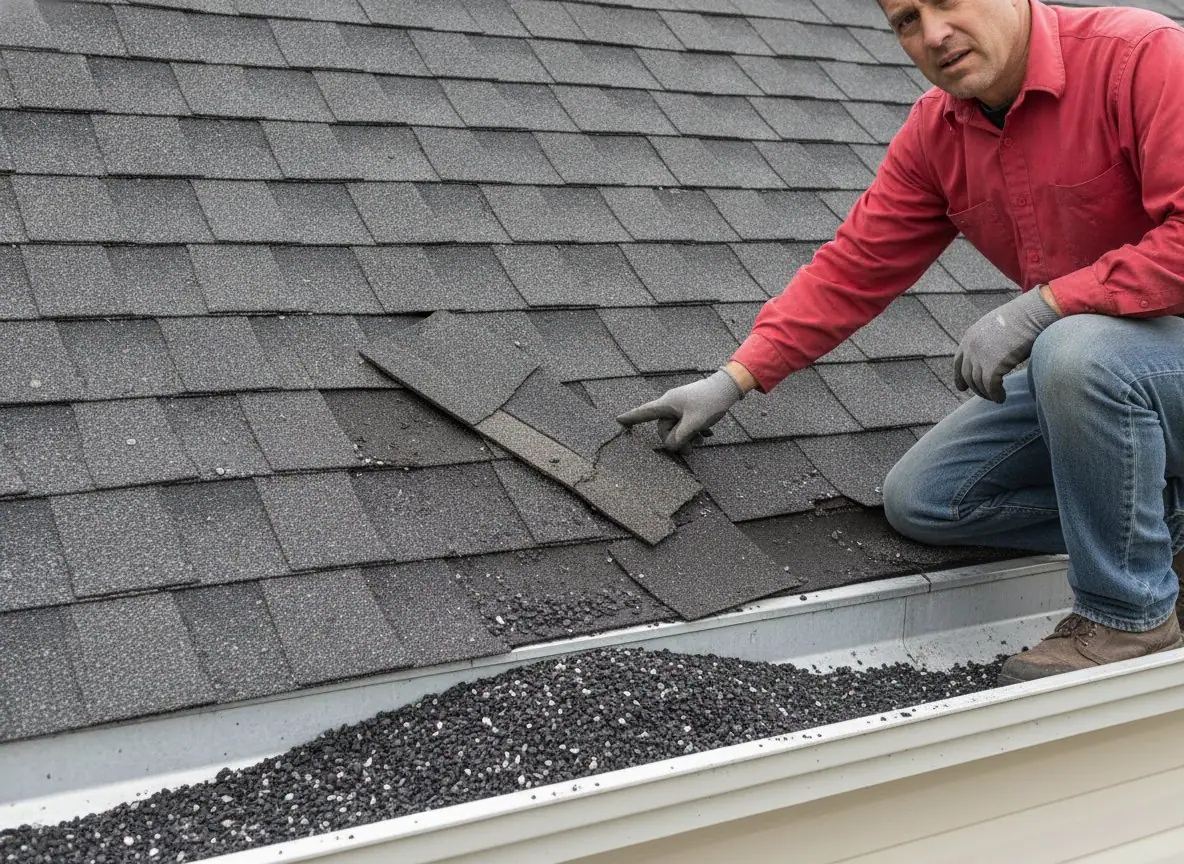
| Granule loss | Minor, in one area | Bare spots and heavy granules in gutters |
| Curling or cracking | Isolated shingles | Widespread curling, cupping, or brittleness |
| Deck condition | Solid underfoot | Soft, sagging, or rotted sheathing |
| Roof age | Well within expected life | Near or past expected life |
| Ice dams | Occasional, fixable with flashing | Chronic, tied to failed underlayment and ventilation |
A useful rule: if repair costs are adding up year after year, or more than one slope is failing, put that money toward a new roof. A roof inspection will tell you which side of the line you are on. Once replacement is on the table, the next decision is material.
Free, no-obligation estimates
Talk to Marblehead Roofing
Tell us what you need and we’ll take it from there.
At a glance
What are the three main types of roofing?
The three main types of residential and light commercial roofing are asphalt shingles, metal roofing, and flat or low-slope membrane roofing. Each suits different roof shapes, budgets, and goals.
| Material | Best for | Strengths | Trade-offs |
|---|---|---|---|
| 3-tab asphalt shingles | Budget-focused reroofs | Lowest upfront cost, simple installation | Flatter look, lower wind resistance than dimensional shingles |
| Architectural shingles | Most pitched homes in Marblehead | Thicker, dimensional look, better wind performance | Costs more than 3-tab |
| Standing seam metal | Long-term owners, coastal exposure, snow shedding | Long service life, sheds snow and ice, concealed fasteners | Higher upfront cost, specialized installation |
| TPO membrane | Flat and low-slope roofs, porches, additions | Seamless coverage, reflective surface | Not for steep slopes |
Comparing shingle options
For most homeowners, the real choice is between 3-tab and architectural shingles. Three-tab shingles are a single layer with a uniform pattern. Architectural shingles laminate two layers for depth and generally carry higher wind ratings, which matters on exposed waterfront lots. Most homeowners in Marblehead choose architectural shingle installation for that balance of appearance and durability. See our roofing materials guide for more detail. Beyond these three types, newer products are also worth knowing about.
What is the newest type of roofing?
The newest types of roofing include solar shingles that generate electricity, synthetic composite shingles that imitate slate or cedar, and "cool roof" products with reflective coatings that reduce heat absorption.
- Solar shingles integrate photovoltaic cells into the roof surface. They require electrical work and a roof layout with good sun exposure.
- Synthetic slate and shake are made from engineered polymers. They give historic-style homes the look of slate or cedar at lower weight.
- Cool-roof shingles and coatings use reflective granules or pigments, most useful on low-slope roofs and in hot exposures.
- Upgraded underlayments such as full-coverage synthetic and self-adhered membranes improve leak protection under any material.
Read moreShow less
Newer is not automatically better for every house. If you live in one of Marblehead's historic districts, check whether a visible material or color change needs review before you commit. Whatever material you choose, the installation process follows the same basic sequence.
How is a roof replaced, step by step?
A roof is replaced by protecting the property, tearing off the old roof, repairing the deck, installing underlayment and flashing, laying the new roofing, and finishing with ventilation, inspection, and cleanup. Here is how our roof replacement services typically run:
- Free inspection and measurement. We check the deck, flashing, ventilation, and attic, measure the roof, and document conditions.
- Written estimate. You get a line-by-line scope, material options, and the plan for any deck repair.
- Permit and scheduling. The permit is pulled and materials are ordered for your install date.
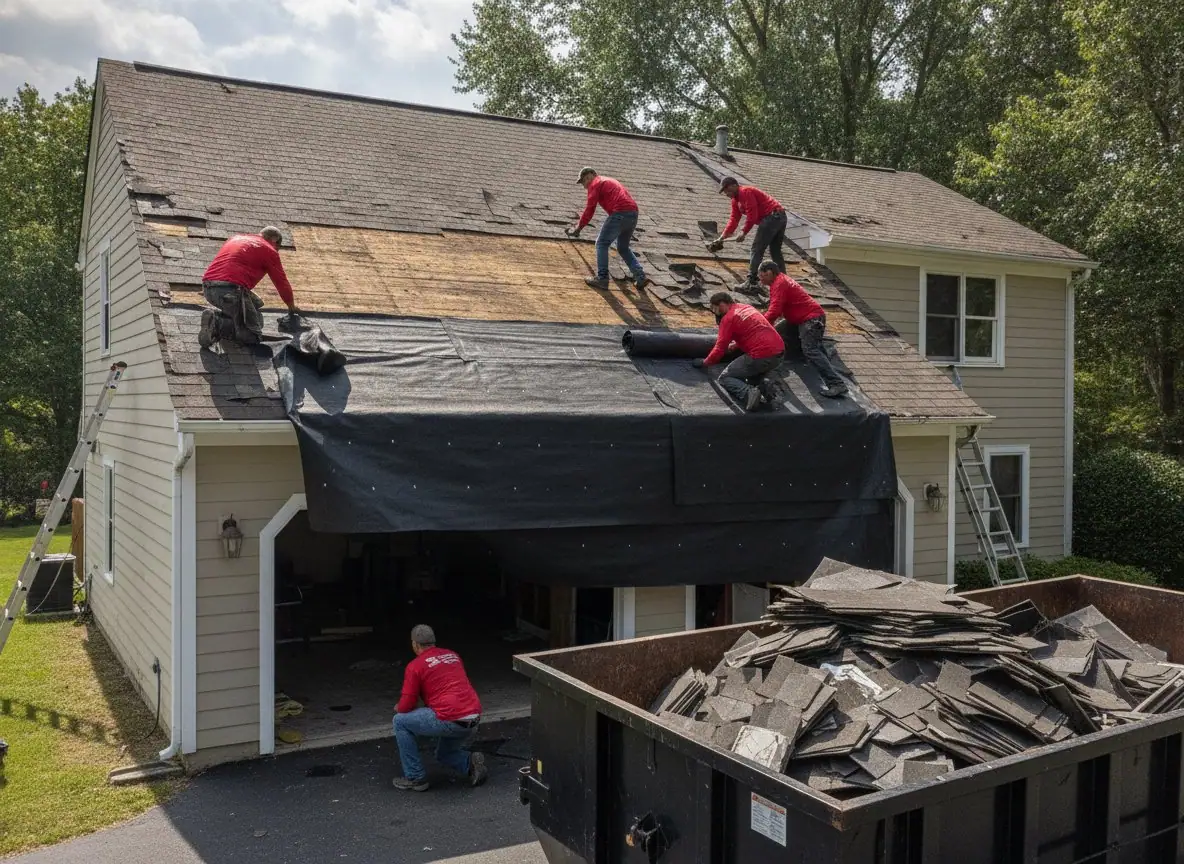
- Site protection. Tarps cover landscaping, siding, and walkways, and a dumpster is placed.
- Tear-off. Old shingles, underlayment, and nails are removed to the bare deck.
- Deck repair. Rotted or damaged sheathing is replaced.
- Underlayment and ice barrier. Ice and water shield goes at eaves and valleys, synthetic underlayment across the field.
- Drip edge and flashing. New metal edges and flashing are installed at walls, chimneys, and penetrations.
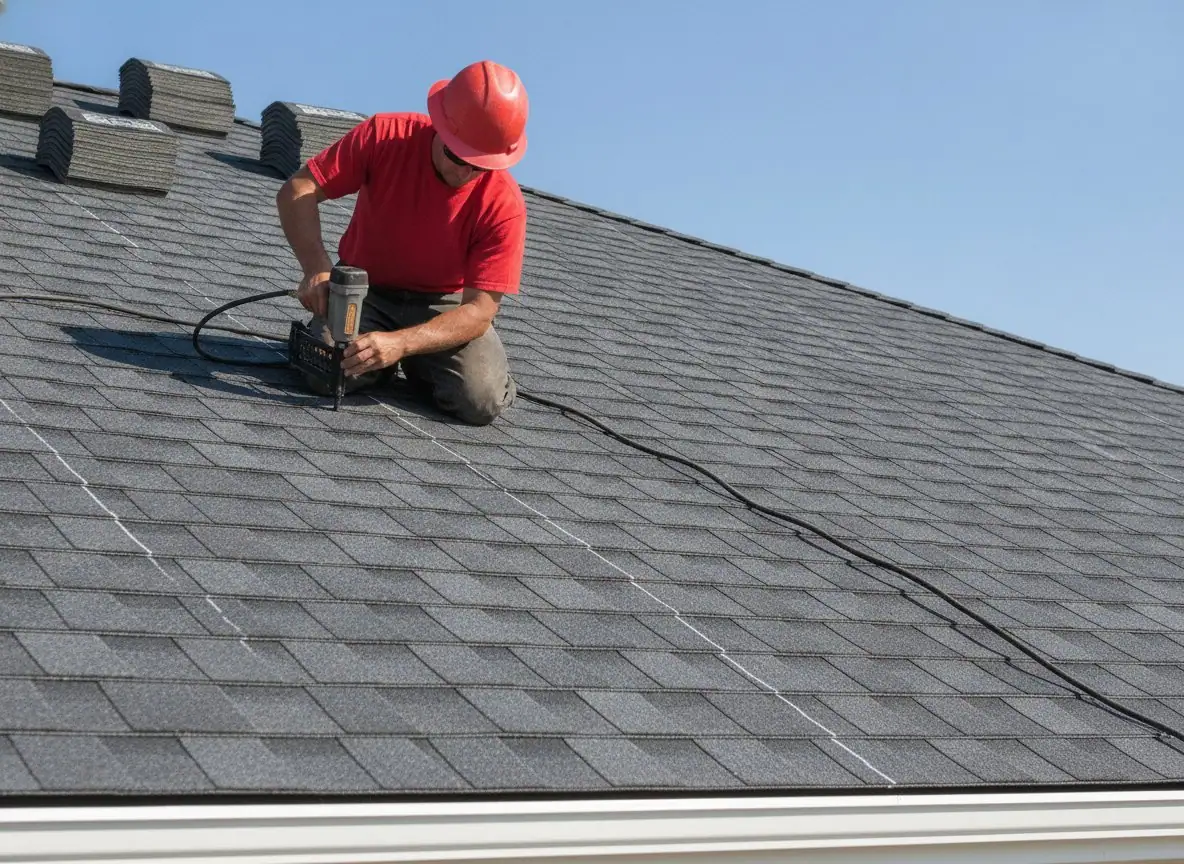
- Roofing installation. Shingles, metal panels, or membrane are installed to manufacturer specifications.
- Ventilation and ridge. Ridge vents and caps are installed to balance attic airflow.
- Cleanup and walkthrough. Magnetic sweeps pick up nails, debris is hauled away, and we review the finished roof with you.
Knowing the steps makes it easier to understand how long the job will take.
How long does a roof replacement take?
Most residential roof replacements take one to three days of on-site work, though larger, steeper, or more complex roofs can take longer. The schedule depends on:
- Roof size and the number of slopes, valleys, and dormers
- Pitch, since steep roofs require more staging and safety setup
- Number of layers being torn off
- Amount of deck repair found during tear-off
- Material, since standing seam metal usually takes longer than shingles
- Weather, especially wind and rain on the coast
Permitting and material ordering add time before work begins. Many of the same factors that affect timing also affect cost.
At a glance
How much does a new roof usually cost in Marblehead, MA?
The cost of a new roof in Marblehead depends on the size of the roof, the material you choose, how difficult the roof is to work on, and what is found underneath. We provide a written quote after a free inspection rather than quoting a number sight unseen.
| Cost factor | Why it matters |
|---|---|
| Roof size (squares) | More area means more material and labor |
| Material | 3-tab, architectural, metal, and membrane differ in price and install time |
| Pitch and access | Steep roofs, tight lots, and multi-story homes need more safety setup |
| Tear-off layers | Each existing layer adds labor and disposal |
| Deck damage | Rotted sheathing must be replaced before new roofing goes on |
| Complexity | Valleys, dormers, skylights, and chimneys need more flashing work |
| Ventilation upgrades | Adding ridge or intake vents adds material and labor |
| Permits and disposal | Required fees and dumpster costs |
How to estimate your roof size
Roofers measure in "squares," where one square equals 100 square feet. To get a rough figure:
- Measure your home's footprint, including overhangs, and multiply length by width.
- Multiply by a pitch factor: about 1.05 for a 4/12 pitch, 1.12 for 6/12, 1.20 for 8/12, and 1.41 for 12/12.
- Divide by 100 to get squares.
- Add roughly 10 to 15 percent for waste on roofs with hips, valleys, and dormers.
This gives a ballpark only. Our inspection produces an exact measurement. For more detail, see our page on roof replacement cost in Marblehead. With those factors in mind, it is easier to judge whether a specific quote is reasonable.
Is $30,000 too much for a roof?
Whether $30,000 is too much for a roof depends entirely on what the quote covers. That figure can be reasonable for one home and high for another, so compare scopes rather than totals.
When you review any quote, check:
- Roof size in squares and the specific material named
- Whether full tear-off is included and how many layers
- How deck repair is priced if rot is found
- Ice and water shield coverage and underlayment type
- New flashing versus reused flashing
- Ventilation work, permits, and disposal
Two quotes with similar totals can describe very different roofs. A lower number that skips flashing or ice barrier often costs more later. Many homeowners also ask whether tax incentives can offset the cost.
Will there be a tax credit for roof replacement in 2026?
We cannot tell you whether a tax credit will apply to your roof replacement in 2026, because eligibility depends on current federal and state rules, the specific product installed, and your personal tax situation. Tax law changes, and credits that existed in prior years may not carry forward.
Before counting on any credit:
- Check current IRS guidance and Massachusetts programs for the year your roof is installed.
- Ask whether the specific product, such as solar shingles, has its own eligibility rules separate from standard roofing.
- Keep your invoice and product documentation.
- Talk with a qualified tax professional before making decisions based on a credit.
Insurance and financing are more common ways homeowners manage the cost.
Can insurance or financing help pay for a new roof?
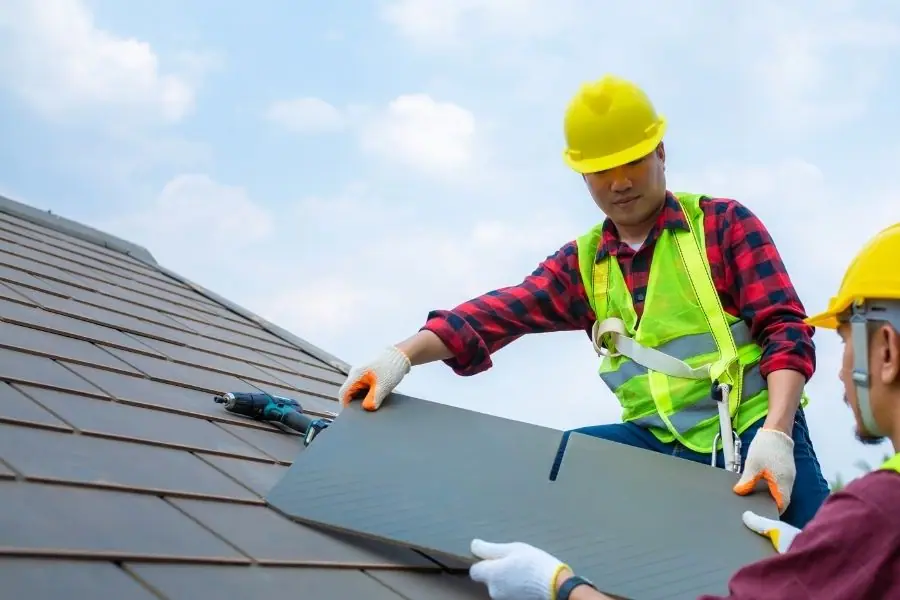
Yes, insurance may cover a roof replacement when the damage comes from a covered event such as a storm, and financing can spread the cost of a planned replacement over time. Marblehead Roofing helps with both.
FAQ
Frequently asked questions
How do I know if my roof needs to be replaced?
Look for widespread curling or missing shingles, heavy granule loss, soft spots on the deck, daylight in the attic, or leaks in more than one place. A roof near the end of its expected life with any of these signs is usually a replacement candidate. A free inspection confirms it.
Can a new roof go over the old shingles?
Building code generally allows a recover over one existing layer if the roof is in suitable condition, but we usually recommend a full tear-off. An overlay hides deck damage, prevents new ice and water shield at the deck, and adds weight.
What is the best time of year to replace a roof in Massachusetts?
Late spring through early fall offers the most dependable weather, and asphalt shingles seal best in mild temperatures. Roofs can be replaced at other times when conditions allow, and urgent damage should not wait for the season.
Do I need a permit for a roof replacement in Marblehead?
Reroofing in Massachusetts generally requires a building permit. Your contractor should pull it through the Marblehead Building Department. Homes in historic districts may also need review for visible material or color changes.
What should be in a roof replacement estimate?
A good estimate lists roof size, material brand and style, tear-off scope, deck repair pricing, underlayment and ice barrier coverage, flashing, ventilation, permits, disposal, and payment terms.
How do I choose a roof replacement contractor?
Choose a roof replacement company that is insured, explains its scope in writing, pulls permits, and has reviews you can read. Ask for license and registration details and verify them with the state.
To get started with Marblehead Roofing or explore our other roofing services in Marblehead, call (339) 229-8855 for a free inspection.
Why choose us
Why choose Marblehead Roofing?
Free estimates
Get a clear, no-obligation estimate before any work begins.
Licensed & insured
Your property and our crew are protected on every project.
Residential & commercial
One team for homes, multi-family and commercial properties.
Locally owned & operated
A local team serving your community and the surrounding area.
Get in touch
Find roofing help near you
Request a free estimate online or give us a call — our team will follow up quickly.
- Call us(339) 229-8855
- Visit40 Tioga Way, suite 251, Marblehead, MA 01945
- HoursMon-Sun: 7:00 am – 7:00 pm